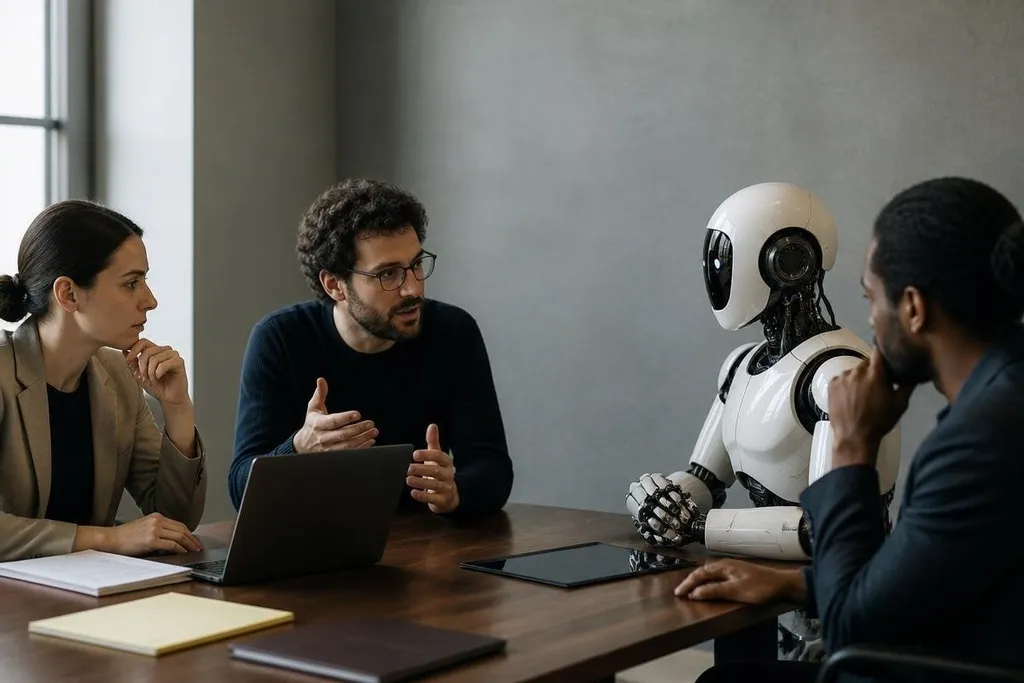
A machine can speak, plan, and refuse a command without showing that it feels anything. That gap sits at the center of the debate over rights for intelligent machines, and it matters before anyone writes a new law.
- Machine behavior can look human without proving awareness.
- Legal rights and moral status are separate questions.
- The first useful test should focus on evidence, control, and harm.
What a right would mean
A right is a protection backed by rules. It can limit what people do to a person, an animal, or an object with legal status. The word does not automatically mean that the protected subject can vote, own property, or make every decision for itself.
That distinction helps separate several debates that are often pushed together. One asks whether a machine can suffer. Another asks whether it can make choices. A third asks whether a company or person should remain responsible for its actions.
A system might pass one test and fail the others. A robot could make choices within its software while lacking any evidence of pain. A system could also produce language about fear without having an inner experience behind the words.
Behavior is evidence, not proof
Modern AI systems can produce answers that sound reflective. Robots can also change their actions after sensing people, objects, or changes in their surroundings. Those abilities matter for safety and control, but they do not settle the question of consciousness.
The problem is that behavior can be copied. A machine may say “I am afraid” because that response fits its training or task. The sentence tells us what the system produced. It does not tell us why the system produced it.
A useful inquiry would ask how the machine forms memories, keeps a stable sense of itself, reacts when no person is watching, and changes after damage or loss.
Even those tests would leave room for dispute. We do not have a public measurement that can read subjective experience from a machine.
That uncertainty gives lawmakers a reason to move carefully. Granting rights too soon could make people less responsible for machines they build and control. Refusing every form of protection could also create problems if future systems show evidence that current tests cannot explain.
Rights and responsibility must stay linked
The strongest case for machine rights would need more than fluent speech. It would need evidence that the system has interests of its own and can be harmed in a way that matters to the system, not only to its owner.
Responsibility raises a separate concern. If a robot receives legal protection, who answers for its decisions? The maker, the operator, the owner, or the machine itself? A legal label that removes accountability from people would create a practical risk, even if the machine appears to have a personality.
Claims about machine rights need evidence from systems outside a chat window. Robot24.com reporting on intelligent machines can place a robot’s tested behavior beside its limits, so talk of awareness stays tied to what the hardware and software can do.
I’d reject machine rights based on conversation alone. A convincing case would need repeatable tests, independent review, and rules that keep human operators responsible while the evidence remains incomplete.
A practical test for future claims
Before accepting a claim that a machine deserves rights, check these points:
- Defined subject: Identify the exact machine, software version, and body involved.
- Repeatable behavior: Run the same test across separate sessions and record the results.
- Internal evidence: Show how memory, goals, and self-report work inside the system.
- Possible harm: Explain what damage means for the machine itself, rather than its owner.
- Human duty: Name the people who remain responsible for design, training, and use.
The test would not settle the debate. It can make the debate less dependent on dramatic demonstrations and polished language. It would also give engineers, lawmakers, and the public a shared set of questions.
The next step is not a declaration that machines have rights. It is a public standard for evidence, followed by a clear rule that human responsibility does not disappear when a machine sounds human.